 Bearly Fit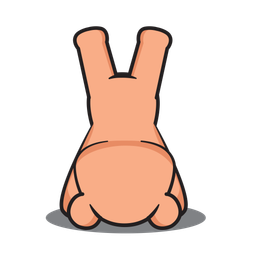
Handstand Push-Ups
Also known as: HSPU • Handstand Press-Up • Handstand Push Up • Handstand Push-Up
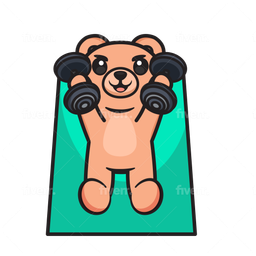
Plant your paws, kick up, and pretend you are a strong bear doing an upside down honey press. Lower your head with control, then push the floor away until your elbows lock out. Keep your belly braced and your body stacked like a tall pine tree. Start with wall support if you are wobbly.
Instructions
- Warm up wrists, shoulders, and upper back; practice a stable handstand hold.
- Place hands shoulder width apart on the floor, fingers spread, gripping the ground.
- Kick up into a handstand with heels lightly against a wall (or free balance if advanced).
- Stack wrists under shoulders and keep ribs down with a braced core and glutes tight.
- Lower under control by bending elbows, keeping forearms mostly vertical.
- Descend until the top of your head lightly touches the floor or a pad/ab mat.
- Press strongly through palms to extend elbows and return to the handstand.
- Reset your line and breathing, then repeat for reps.
Benefits
- Builds strong shoulders and triceps with an overhead pressing pattern
- Improves scapular control and shoulder stability under load
- Develops core bracing and full-body tension
- Enhances balance, coordination, and body awareness
- Minimal equipment required
Key Points
- Keep a straight, stacked line: wrists under shoulders, hips over shoulders, heels over hips.
- Brace core and squeeze glutes to avoid over-arching the lower back.
- Use a pad/ab mat to standardize depth and protect the head.
- Aim for controlled tempo on the way down; do not collapse into the bottom.
- Hands slightly turned out can reduce wrist strain for some lifters.
Common Mistakes
- Over-arching the back and flaring ribs (banana shape)
- Letting elbows flare excessively, losing pressing leverage
- Bouncing the head off the floor or crashing into the bottom
- Hands too wide or too narrow, causing instability and poor mechanics
- Not stacking shoulders over wrists, leading to balance loss
- Skipping wrist and shoulder warm-up
Muscle Groups
TricepsShouldersLower BackCoreChest