 Bearly Fit
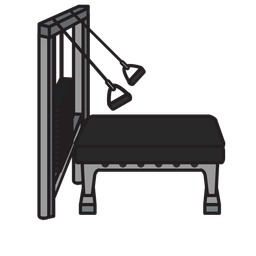
High Cable Curls
Also known as: High Pulley Cable Curl • Cable High Curl • High Cable Biceps Curl
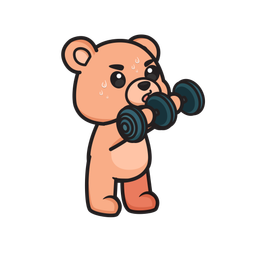
Set the cables up high like honey jars on a top shelf, then curl those handles in with proud bear paws. Keep your elbows up, shoulders steady, and squeeze your biceps like you are hugging a tree. Slow and controlled reps make the cable tension feel like a cozy, constant tug.
Instructions
- Set both cable pulleys to a high position and attach single handles.
- Stand centered between the stacks and grab a handle in each hand with palms facing forward.
- Step forward slightly to create tension, arms out to the sides with elbows lifted about shoulder height.
- Brace your core and keep your chest tall and shoulders down and back.
- Curl the handles toward your temples/forehead by bending at the elbows while keeping upper arms fixed.
- Squeeze the biceps at the top without letting elbows drift forward.
- Lower slowly to the start position under control and repeat for reps.
Benefits
- Isolates the biceps with constant cable tension through the range of motion
- Can increase peak contraction and mind-muscle connection
- Helpful alternative to dumbbell curls for more consistent resistance
- Trains elbow flexion strength with strict form
- Allows easy load adjustments and smooth reps
Key Points
- Keep elbows high and mostly in line with the shoulders throughout the set.
- Move only at the elbow; avoid turning it into a row or a front-delt movement.
- Control the negative to maintain cable tension and reduce swinging.
- Use a stance that keeps constant tension without leaning back excessively.
- Stop if you feel sharp pain at the front of the shoulder; reduce range or load.
Common Mistakes
- Letting elbows drop and turning the movement into a standard cable curl
- Leaning back and using body momentum to move the weight
- Shrugging shoulders up and stressing the neck/traps
- Allowing wrists to bend back excessively instead of staying neutral
- Using too much weight and shortening the range of motion
Muscle Groups
ForearmsBicepsShouldersCore