 Bearly Fit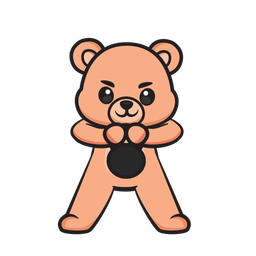
Kettlebell Sumo High Pull
Also known as: Kettlebell High Pull (Sumo Stance)
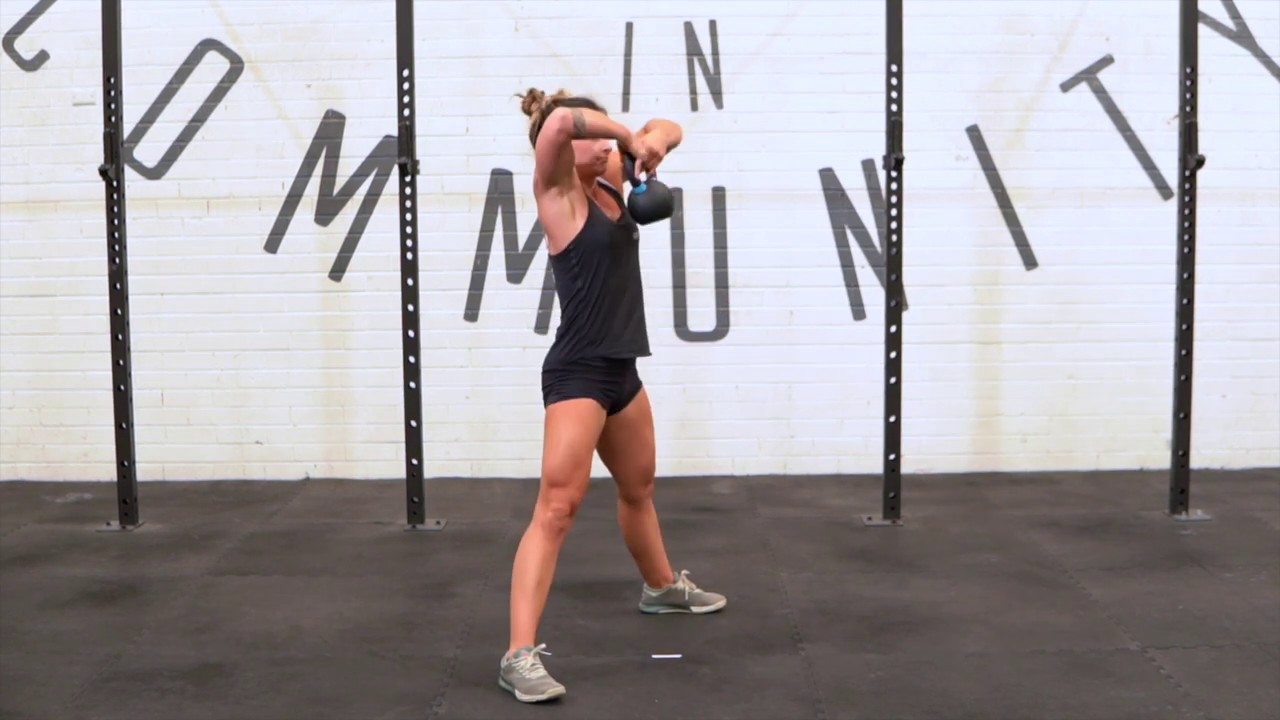
Plant your paws wide like a sturdy bear stance, then pop those hips to launch the kettlebell upward. Your legs and honey-hauling backside do the heavy lifting, while your shoulders and upper back guide the bell like a curious cub sniffing the air. Keep it snappy, tall, and controlled.
Instructions
- Stand with feet wider than shoulder-width and toes slightly turned out, kettlebell on the floor between your feet.
- Brace your core, hinge at the hips, and bend knees to grab the handle with both hands.
- Keep your chest up and back neutral; shift weight through mid-foot and heels.
- Drive through the floor to extend hips and knees powerfully, letting the kettlebell rise close to your body.
- As the bell reaches upper-abdomen to chest height, pull elbows up and out (above wrists) while keeping shoulders down and back.
- Pause briefly at the top with the bell close to your torso.
- Lower the kettlebell under control by reversing the motion into a hinge and squat, returning it toward the start position.
- Repeat for reps, maintaining crisp hip drive and a close kettlebell path.
Benefits
- Builds hip power and posterior chain strength
- Trains upper back and shoulder strength/endurance
- Improves full-body coordination and athletic explosiveness
- Elevates heart rate for conditioning while strength training
- Reinforces hinge mechanics useful for swings and deadlifts
Key Points
- Power comes from the hips and legs; arms guide the bell, not yank it.
- Keep the kettlebell close to the body to reduce shoulder strain.
- Elbows travel up and out; avoid curling the weight.
- Maintain a neutral spine and braced core throughout.
- Stop the pull around chest height; do not force a higher upright row.
- Use a load that allows speed and control without losing posture.
Common Mistakes
- Pulling mostly with the arms instead of driving with the hips
- Letting the kettlebell drift away from the body
- Rounding the lower back at the bottom position
- Over-pulling too high and irritating the shoulders
- Collapsing knees inward instead of tracking over toes
- Leaning back excessively at the top instead of standing tall
Muscle Groups
Upper LegBicepsShouldersLower BackLower LegCoreGlutesNeck