 Bearly Fit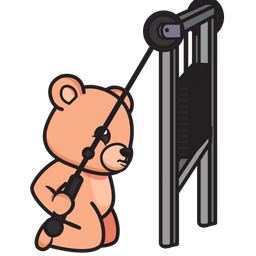
Kneeling One Arm High Pulley Row
Also known as: Half-Kneeling Single Arm High Cable Row • Kneeling High-To-Low Single Arm Cable Row • Single Arm High Pulley Row (Kneeling)
Kneel like a curious cub and tug that high cable down and back like you are pulling a honey jar off a tall shelf. Keep your ribs tucked and your belly braced so your den does not twist. One paw at a time, you will build a strong, wide bear back.
Instructions
- Set a cable pulley to a high position and attach a single handle.
- Kneel facing the machine with the working-side knee down and the other foot planted for stability.
- Grab the handle with the working hand, arm extended, shoulder down and away from your ear.
- Brace your core and keep your torso tall and square to the machine.
- Pull the handle down and back toward your lower ribs/hip, driving the elbow toward your back pocket.
- Pause briefly while squeezing your lat and upper back.
- Slowly return to the start with control, allowing the shoulder blade to protract slightly without shrugging.
- Complete reps, then switch sides.
Benefits
- Builds lat and upper-back strength with constant cable tension
- Improves left-right pulling symmetry through unilateral work
- Enhances scapular control (retraction/depression) for healthier shoulders
- Trains anti-rotation core stability in a half-kneeling/kneeling base
- Transfers well to pull-ups, rows, and sport pulling patterns
Key Points
- Keep ribs down and pelvis stacked; avoid twisting toward the pulling arm.
- Lead with the elbow; keep the wrist neutral and shoulder packed.
- Pull toward lower ribs/hip to bias the lat rather than the upper traps.
- Use a controlled eccentric and full reach without losing shoulder position.
- Choose a load that lets you stay tall and stable while kneeling.
Common Mistakes
- Rotating the torso or leaning back to move the weight
- Shrugging the shoulder up toward the ear during the pull
- Pulling too high toward the chest, turning it into a trap-dominant movement
- Letting the elbow flare excessively and losing lat engagement
- Bouncing through reps or cutting the range of motion short
- Overarching the low back or letting ribs flare
Muscle Groups
BicepsShouldersLower BackCoreGlutesNeck