 Bearly Fit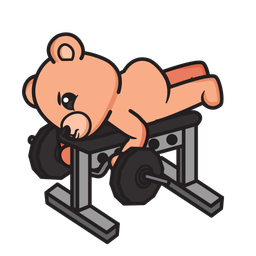
Lying Cambered Barbell Row
Also known as: Chest Supported Cambered Barbell Row • Prone Cambered Barbell Row
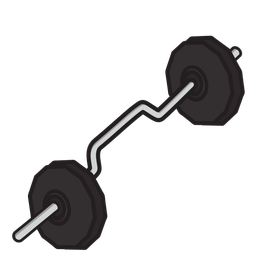
Plop your belly on the bench like a cozy bear on a log, then row that cambered bar up to your ribs. No wiggly lower-back cheating, just pure back-building grrrit. Squeeze your shoulder blades like you are hugging a honey jar, then lower slow and steady.
Instructions
- Set an incline bench low enough that the cambered bar can hang freely without touching the floor.
- Lie face down with your chest supported and feet braced wide for stability.
- Grip the cambered barbell slightly wider than shoulder width and let your arms hang straight.
- Set your shoulders down and back, keeping your neck neutral and core braced.
- Row the bar toward your lower chest or upper abdomen by driving elbows back.
- Pause briefly and squeeze your shoulder blades together at the top.
- Lower the bar under control to a full stretch without losing shoulder position.
- Repeat for the desired reps, keeping your torso pinned to the bench.
Benefits
- Builds lats and mid-back thickness with reduced lower-back loading
- Improves scapular retraction strength and posture
- Cambered bar allows increased range of motion and a deeper stretch
- Helps limit cheating compared to unsupported bent-over rows
- Supports hypertrophy-focused back training with consistent form
Key Points
- Keep your chest in contact with the bench to minimize momentum.
- Lead with elbows, not hands, to target the back.
- Maintain a neutral neck and avoid craning upward.
- Use a controlled eccentric and reach a full stretch at the bottom.
- Stop the row when the elbows are slightly behind the torso without shrugging.
Common Mistakes
- Shrugging the shoulders at the top instead of retracting the scapulae
- Bouncing the bar or using momentum off the bench
- Letting the elbows flare excessively, turning it into a rear-delt dominant pull
- Cutting the range of motion short at the bottom
- Overextending the neck or looking forward the entire set
Muscle Groups
BicepsShouldersLower BackCoreNeck