 Bearly Fit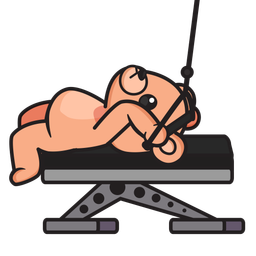
Lying High Cable Curl
Also known as: Lying Close-Grip Bar Curl On High Pulley • Lying Cable Curl • Lying High Pullet Cable Curls
Plop onto the bench like a cozy bear in a den, grab that close-grip bar, and curl with steady paws. The high cable keeps tension like a honey jar that never gets lighter. Keep elbows tucked and let your biceps do the foraging, not your shoulders or hips.
Instructions
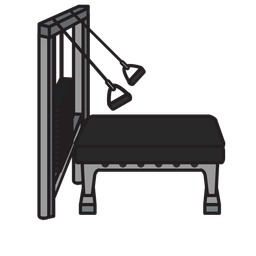
- Set a cable station with the pulley at the highest position and attach a close-grip straight bar.
- Place a flat bench a short distance in front of the cable machine, aligned with the pulley.
- Lie on the bench on your back with your head closer to the cable, feet planted for stability.
- Reach back/overhead and grasp the bar with a close, supinated (palms-up) grip.
- Start with arms extended toward the pulley, elbows slightly bent, and elbows pointed upward.
- Curl the bar toward your forehead/upper chest by flexing at the elbows while keeping upper arms relatively fixed.
- Pause briefly and squeeze the biceps at the top without letting elbows drift excessively.
- Lower the bar under control back toward the pulley until you feel a full stretch in the biceps.
- Repeat for reps, keeping tempo smooth and shoulders down.
Benefits
- Strong biceps isolation with consistent cable tension
- Reduced cheating compared with standing curls due to bench support
- Emphasizes peak contraction and controlled eccentric
- Can be easier on wrists/forearms than some free-weight variations for some lifters
Key Points
- Keep elbows tucked and mostly fixed; move at the elbow joint.
- Maintain cable tension throughout; avoid resting at the bottom.
- Use a controlled eccentric (lowering) to maximize biceps loading.
- Keep shoulders depressed and avoid shrugging as you curl.
- Choose a bench distance that keeps the cable pulling in line with your forearms.
Common Mistakes
- Letting elbows flare or drift, turning it into a shoulder movement
- Using momentum by arching the back or shifting on the bench
- Shrugging shoulders up toward ears during the curl
- Cutting range of motion short at the bottom and losing stretch
- Using too much weight and turning reps into partials
Muscle Groups
ForearmsBicepsShouldersCore