 Bearly Fit
Natural Glute Ham Raise
Also known as: Natural GHR • Natural Glute-Ham Raise
Kneel down like a bear about to sniff the forest floor, then resist the “face-plant” with strong hamstrings. With your paws (glutes) helping, you lower slowly and pull yourself back up. Keep your spine like a sturdy tree trunk, and let your back legs do the heavy lifting. Rawr-strong posterior chain!
Instructions
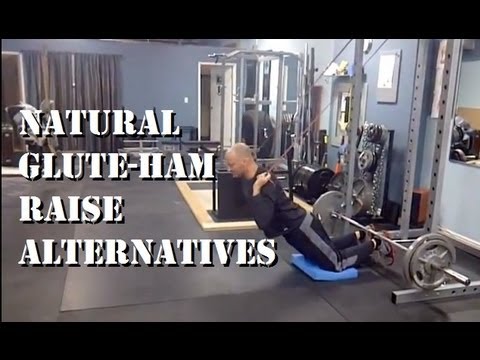
- Kneel on a padded surface with your torso tall and hips extended (straight line from knees to shoulders).
- Have a partner hold your ankles down firmly, or wedge your heels/ankles under a secure, immovable anchor.
- Brace your core and keep a neutral spine; squeeze glutes lightly to keep hips from folding.
- Slowly lean your whole body forward from the knees, keeping hips extended and shoulders, hips, and knees aligned.
- Lower under control as far as you can without losing alignment; use your hands to catch yourself if needed.
- Pull yourself back up by driving hamstrings and glutes, keeping hips extended and ribs down.
- Reset at the top and repeat for controlled reps.
Benefits
- Builds hamstring strength with a strong eccentric emphasis
- Improves posterior-chain strength (hamstrings, glutes, spinal erectors)
- May enhance knee flexor strength relevant to sprinting and change of direction
- Bodyweight option when no GHD machine is available
- Reinforces full-body tension and trunk control
Key Points
- Move as one unit from knees to shoulders; avoid bending at the hips.
- Control the eccentric (lowering) portion; that is where much of the benefit comes from.
- Keep ribs down and core braced to prevent low-back overextension.
- Use hands for assistance (push-off) or shorten range if you cannot return with good form.
- Anchor must be stable; slipping ankles can cause injury.
Common Mistakes
- Breaking at the hips (turning it into a hip hinge) instead of staying long
- Dropping too fast and catching with the hands abruptly
- Overarching the lower back to compensate for weak hamstrings
- Letting the anchor/partner position shift during reps
- Using momentum or bouncing at the bottom
Muscle Groups
Upper LegLower LegCoreGlutes