 Bearly Fit
One Arm Kettlebell Push Press
Also known as: Single Arm Kettlebell Push Press • One Arm KB Push Press
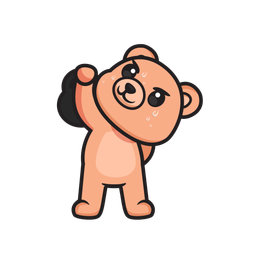
Grab a kettlebell like it is a honey jar and pop it overhead with a little leg spring. Dip, drive, then press and lock it out tall. Your shoulder and triceps do the work, while your core stays braced so you do not wobble like a sleepy bear on a log.
Instructions
- Clean the kettlebell to the rack position on one side (handle diagonal across the palm, bell resting on the forearm).
- Stand tall with feet about hip to shoulder width, free hand out for balance.
- Brace your core and squeeze glutes; keep ribs down and wrist neutral.
- Dip a few inches by bending knees and hips slightly while staying upright.
- Drive through the floor to extend hips and knees, transferring force upward.
- As the kettlebell rises, press it overhead to full lockout with biceps near the ear.
- Stabilize overhead briefly, then lower under control back to the rack position.
- Complete reps, then switch arms.
Benefits
- Builds overhead pressing power and strength with leg drive assistance
- Improves single-arm shoulder stability and scapular control
- Trains anti-rotation core strength and full-body coordination
- Reinforces strong rack and overhead positions useful for kettlebell sport and general strength
- Can allow heavier overhead work than a strict press
Key Points
- Use a shallow, vertical dip; do not turn it into a squat.
- Brace hard to prevent leaning or twisting toward the kettlebell side.
- Press to a stable lockout with stacked wrist, elbow, and shoulder.
- Keep the kettlebell path close and finish with biceps near the ear.
- Control the descent back to the rack; do not crash the bell onto the forearm.
Common Mistakes
- Excessive dip or forward knee travel turning it into a squat
- Pressing with a loose core causing back arching and rib flare
- Leaning sideways or rotating the torso to get the bell overhead
- Banging the kettlebell onto the forearm due to a poor rack or uncontrolled lowering
- Letting the wrist bend back (overextension) under the kettlebell
- Not reaching full lockout or losing overhead stability
Muscle Groups
Upper LegTricepsShouldersLower LegCoreGlutes