 Bearly Fit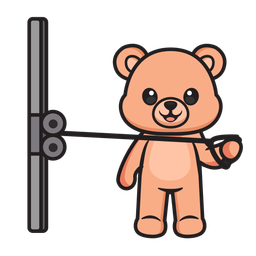
Shoulder External Rotation
Also known as: Rotator Cuff External Rotation • Band External Rotation • Cable Shoulder External Rotation
Shoulder external rotations may look small, but they're a big win for strong, stable shoulders.Whether you're using bands, dumbbells, or cables - or just working against gravity - this move helps protect your shoulders from strain and keeps your posture in bear-proud shape. It's a great way to stay ready for pressing, pulling, or high-fiving other forest friends.
Instructions
- For Resistance Bands: Attach a band to a fixed anchor at elbow height. Stand with the anchor on the opposite side of your working arm. Hold the band with your elbow bent at 90 degrees and pinned to your side. Rotate your forearm outward away from your body while keeping your elbow stationary.
- For Cable Machine: Set the pulley at elbow height and use a D-handle. Perform the same motion as with the resistance band, rotating the arm outward with control.
- For Dumbbells: Lie on your side on a bench or mat with a dumbbell in your top hand. Keep your elbow bent at 90 degrees and pressed against your side. Rotate the dumbbell upward by externally rotating your shoulder, then lower slowly.
- For Bodyweight: Sit or stand upright and use no weight, focusing on the same external rotation movement for mobility and activation drills.
Benefits
- Strengthens the rotator cuff, improving shoulder stability.
- Enhances shoulder joint mobility and control.
- Supports injury prevention and shoulder rehabilitation.
- Improves posture and functional performance in sports and lifting.
- Adaptable with various equipment or no equipment at all.
Key Points
- Keep your elbow fixed at your side to isolate the rotator cuff.
- Rotate the arm slowly and with control - do not use momentum.
- Maintain a neutral wrist and upright posture.
- Avoid leaning or twisting your torso during the movement.
- Only rotate as far as your range of motion allows without discomfort.
Common Mistakes
- Allowing the elbow to drift away from the body.
- Using too much weight, compromising form.
- Moving the upper arm instead of isolating the rotation.
- Twisting the torso to assist the movement.
- Performing reps too quickly without proper control.
Muscle Groups
ForearmsShouldersUpper Back