 Bearly Fit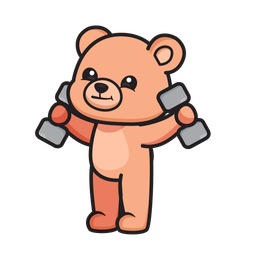
Shoulder Scaption
Also known as: Scaption Raise • Y Raise • Dumbbell Scaption
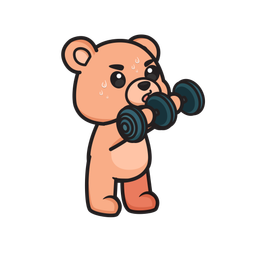
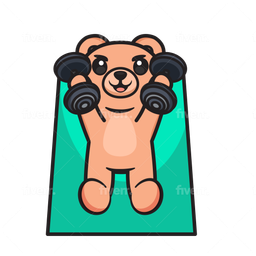
Scaption might sound like something a curious bear mumbles while reading human instructions, but it's actually a smart way to train your shoulders! Raising your arms in a slight V-shape builds strength where your front and side delts meet. Whether you're using dumbbells, kettlebells, or just the weight of your own paws, it helps you move better and keeps your shoulders happy and healthy.
Instructions
- Stand tall with your feet shoulder-width apart, arms at your sides and thumbs pointing forward.
- For Dumbbells or Kettlebells: Hold a weight in each hand with a neutral grip (palms facing inward).
- Raise your arms at a 30-45 degree angle from your torso (in the scapular plane) until they reach shoulder height.
- Keep a slight bend in your elbows and your thumbs pointing upward throughout the lift.
- Pause briefly at the top, then slowly lower the weights back to the starting position.
- For Bodyweight: Perform the same motion without weights, focusing on controlled shoulder activation and posture.
Benefits
- Strengthens the supraspinatus and deltoids.
- Improves shoulder stability and function.
- Reduces risk of shoulder impingement and injuries.
- Enhances posture and scapular control.
- Can be scaled for rehab, mobility, or strength development.
Key Points
- Lift in the scapular plane - slightly forward from the side of your body.
- Keep your core engaged and avoid arching your lower back.
- Maintain a neutral wrist and do not swing the arms.
- Lead the movement with your thumbs pointing upward.
- Control both the upward and downward phases of the lift.
Common Mistakes
- Lifting too high or out of the scapular plane.
- Using momentum or swinging the weights.
- Shrugging the shoulders during the lift.
- Bending the elbows too much, turning it into a front raise.
- Using excessive weight, compromising shoulder control.
Muscle Groups
ShouldersCore