 Bearly Fit
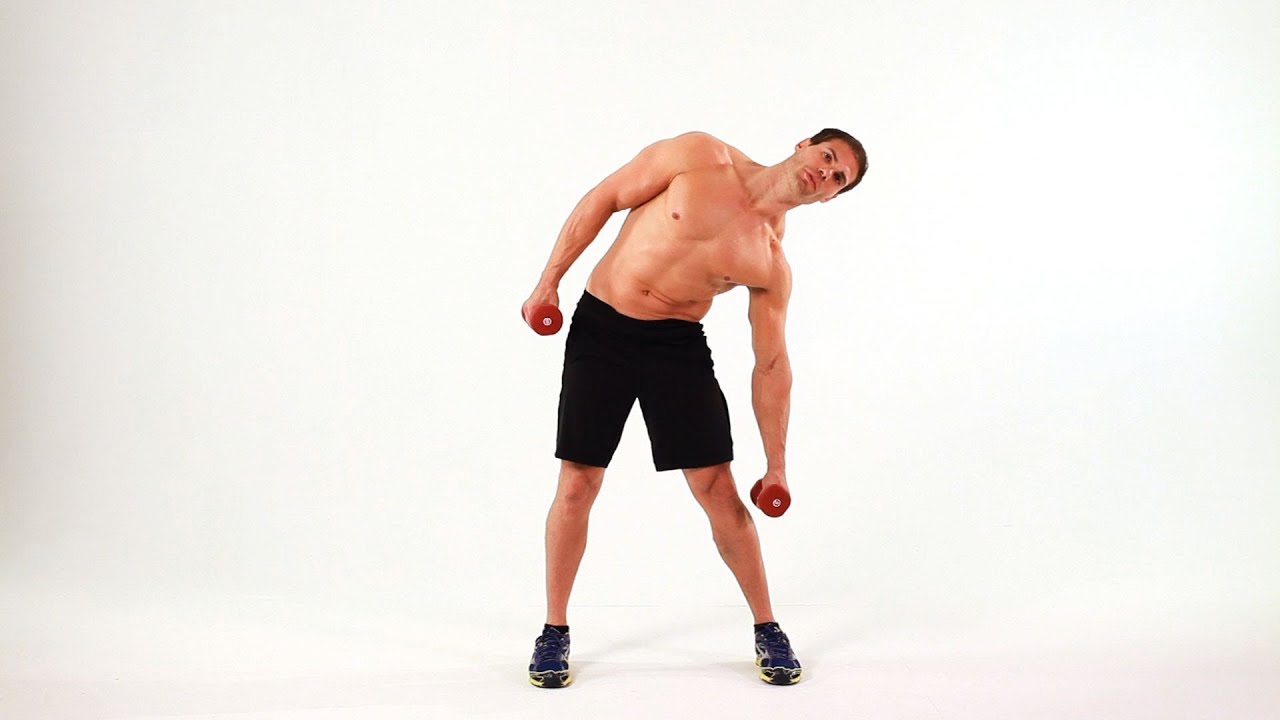
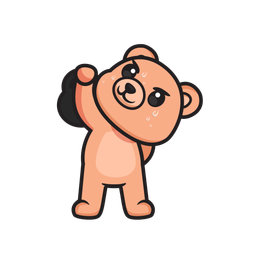
Side Bend
Also known as: Weighted Side Bend • Dumbbell Side Bend • Kettlebell Side Bend
Side bends are a simple but powerful way to train your obliques - those muscles that help you twist, turn, and reach for the last jar of honey on the shelf. Holding a dumbbell or kettlebell adds resistance so your core works harder. Great for building a strong, stable midsection that keeps you moving with ease - even when you're balancing snacks in both paws.
Instructions
- Stand upright with your feet shoulder-width apart.
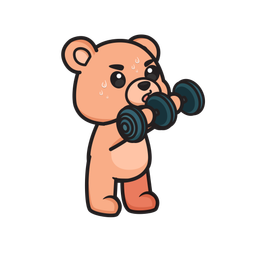
- Hold a dumbbell or kettlebell in one hand at your side, with your other hand placed on your hip or behind your head.
- Keeping your back straight and core engaged, slowly bend sideways at the waist toward the weighted side.
- Lower the weight as far as comfortably possible without twisting your torso or leaning forward.
- Pause briefly, then contract your obliques to return to the starting position.
- Complete all reps on one side before switching to the other.
Benefits
- Strengthens the oblique muscles.
- Improves lateral core stability and torso control.
- Enhances posture and spinal support.
- Increases range of motion and flexibility in the sides.
- Helps improve performance in rotational and side-bending movements.
Key Points
- Move only at the waist - do not rotate the torso.
- Keep your head and neck aligned with your spine.
- Avoid using momentum; control the movement.
- Keep shoulders square and avoid tilting forward or backward.
- Engage your core throughout the exercise.
Common Mistakes
- Using momentum instead of controlled movement.
- Leaning forward or twisting during the bend.
- Shrugging the shoulder with the weight.
- Letting the weight pull you down too far, risking strain.
- Neglecting to train both sides equally.
Muscle Groups
ForearmsCore