 Bearly Fit
Hang Snatch
Also known as: Hang Power Snatch • Power Snatch
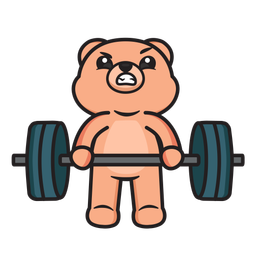
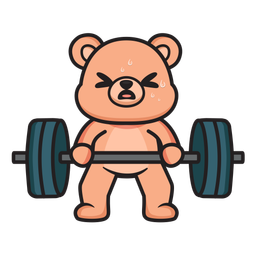
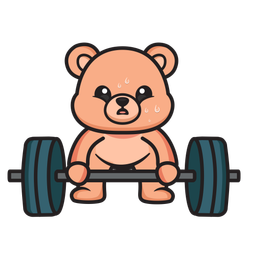
From a dangling bar to a mighty overhead catch, the hang snatch is like a bear launching a salmon skyward and catching it overhead. Stay tall, then pop with power, zip under fast, and sit into a strong overhead squat. Smooth and snappy wins the honey.
Instructions
- Stand with feet about hip-width and hold a barbell with a wide snatch grip.
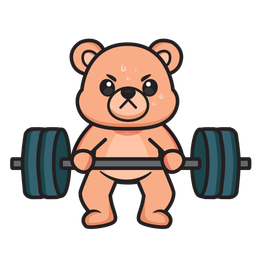
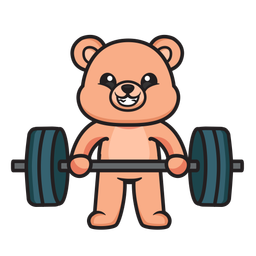
- Lift the bar to a hang position (typically mid-thigh) with arms straight, chest up, and shoulders slightly over the bar.
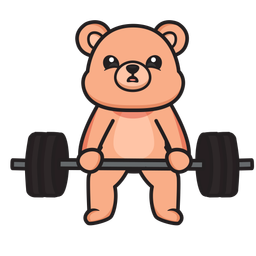
- Brace your trunk, keep the bar close, and shift smoothly into the power position (bar at upper thigh/hip crease).
- Explosively extend hips, knees, and ankles (triple extension) while shrugging to accelerate the bar upward.
- Keep elbows high and to the sides as the bar rises, then quickly pull yourself under the bar.
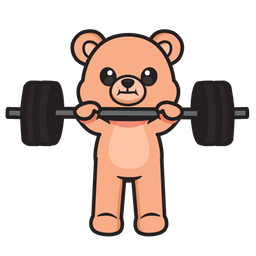
- Rotate the arms to lock the bar overhead and receive it in an overhead squat.
- Stabilize with the bar over mid-foot, then stand up to full extension with control.
- Lower the bar safely to the hang or to the floor and reset for the next rep.
Benefits
- Develops explosive power and rate of force development
- Improves coordination, timing, and speed under the bar
- Builds overhead stability and shoulder/scapular control
- Strengthens posterior chain and legs through dynamic loading
- Enhances mobility demands in ankles, hips, thoracic spine, and shoulders
- Transfers well to Olympic lifting and athletic performance
Key Points
- Keep the bar close to the body throughout the pull.
- Finish the extension before pulling under.
- Punch to a strong overhead lockout with active shoulders.
- Receive with the bar stacked over mid-foot, not drifting forward.
- Maintain a neutral spine and braced trunk in the catch.
- Use a consistent hang position (mid-thigh or above-knee) each rep.
Common Mistakes
- Early arm bend that reduces power from the hips and legs
- Letting the bar swing away from the body
- Cutting the extension short and jumping under too soon
- Catching with soft elbows or unstable shoulders
- Landing on toes or with the bar forward of the mid-foot
- Poor overhead squat mobility leading to collapsed torso or heels lifting
- Starting from an inconsistent hang height each rep
Muscle Groups
Upper LegTricepsShouldersLower BackLower LegCoreGlutes