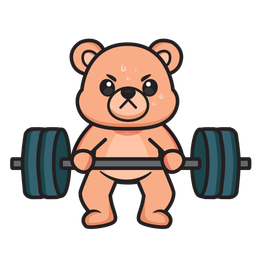
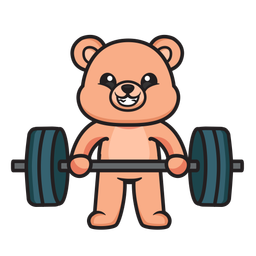
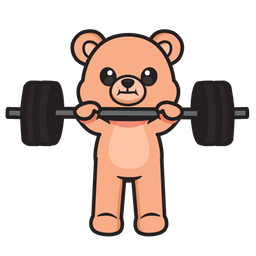
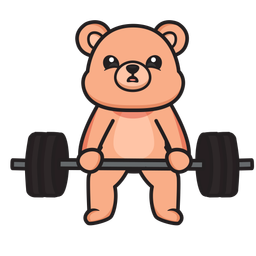
 Bearly Fit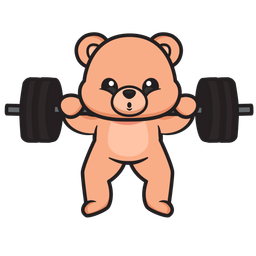
Heaving Snatch Balance
Also known as: Snatch Balance
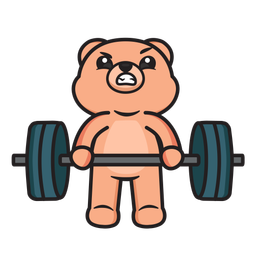
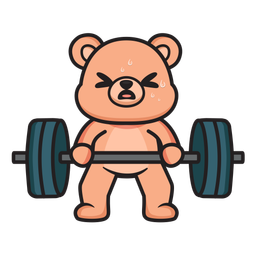
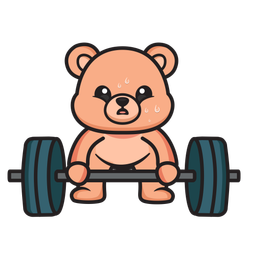
This one is like a bear popping up to snag a jar off the top shelf. You give the bar a quick dip and drive, then scoot your paws under fast to catch it locked out overhead. Stay tall, stay snappy, and sit into a strong cave squat with proud shoulders.
Instructions
- Set the barbell on your upper back/traps with a wide snatch grip and feet about hip to shoulder width.
- Brace your trunk, keep elbows slightly back, and fix your gaze forward.
- Dip straight down a few inches by bending knees while keeping your torso nearly vertical.
- Drive powerfully through the legs to heave the bar upward.
- As the bar rises, aggressively push yourself under it while punching the arms to lockout overhead.
- Receive the bar in a stable overhead squat (or your planned receiving depth) with the bar over midfoot.
- Stand up to full extension with the bar overhead under control.
- Lower the bar back to the back rack safely and reset before the next rep.
Benefits
- Improves speed and confidence moving under the bar in the snatch
- Builds overhead receiving strength and stability
- Reinforces vertical dip and leg drive mechanics
- Develops coordination and timing for snatch turnover and catch
- Strengthens legs and trunk in the overhead squat position
Key Points
- Dip is vertical: knees forward, torso tall, heels down.
- Drive hard, then move under fast; do not press it up slowly.
- Punch to lockout with active shoulders and stable upper back.
- Catch with the bar stacked over midfoot: wrists, elbows, shoulders, hips, and feet aligned.
- Use a controlled return to the back rack; prioritize safety and space.
Common Mistakes
- Turning it into a strict press instead of a dip-drive and drop-under
- Forward dip or hips shooting back, causing the bar to drift forward
- Catching with soft elbows or inactive shoulders
- Feet jumping too wide/narrow or landing unevenly
- Not reaching full depth/position control before standing
- Letting the bar crash onto the back rack on the return
Muscle Groups
Upper LegTricepsShouldersLower BackLower LegCoreGlutesNeck