 Bearly Fit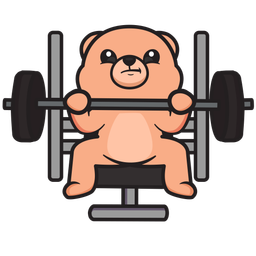
Guillotine Press
Also known as: Neck Press
The neck press is like a curious bear trying a wide paw grip to nibble more upper-chest honey. You lower the bar toward your collar area, then press it back up strong and steady. It can be spicy on the shoulders, so only do it if your joints feel happy and you can keep control the whole time.
Instructions
- Lie on a flat bench with eyes under the bar and feet planted firmly.
- Grip the bar slightly wider than bench press, wrists stacked over forearms.
- Unrack the bar and hold it above the upper chest/shoulder line with elbows slightly unlocked.
- Inhale and lower the bar under control toward the base of the neck/clavicles, keeping forearms near vertical.
- Pause briefly without bouncing, keeping shoulder blades retracted and depressed.
- Exhale and press the bar back up to the start position, maintaining a stable torso and bar path.
- Rack the bar safely using the uprights.
Benefits
- Greater emphasis on upper pectorals compared with a standard bench press for some lifters
- Builds pressing strength through a different bar path and grip width
- Adds variation for hypertrophy programming when shoulders tolerate it
Key Points
- Use a spotter and/or safety arms; the bar path is closer to the throat.
- Keep shoulder blades pulled back and down to protect the shoulders.
- Lower to the clavicle area, not onto the neck or throat.
- Control the eccentric; avoid fast drops.
- Consider a slight incline bench if flat causes shoulder discomfort.
- Start light; this variation can feel much heavier on the shoulders.
Common Mistakes
- Lowering the bar onto the throat/neck
- Using too much weight and losing control near the bottom
- Letting elbows flare excessively and shoulders roll forward
- Bouncing the bar off the upper chest/clavicles
- Failing to retract the scapulae, increasing anterior shoulder stress
- Overarching the lower back to compensate for poor shoulder position
Muscle Groups
TricepsShouldersCoreChest