 Bearly Fit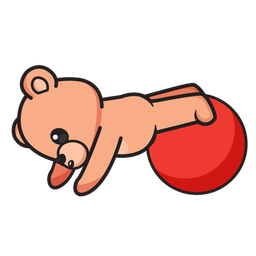
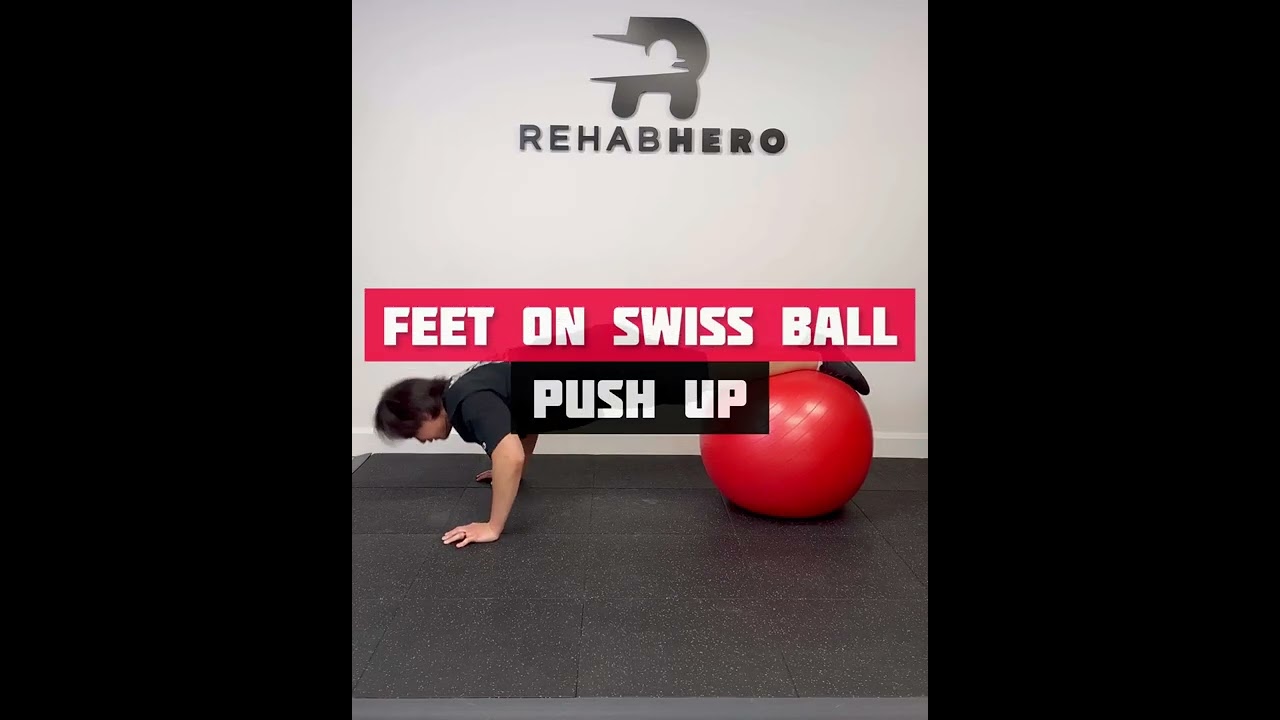
Swiss Ball Feet Push Up
Also known as: Feet-Elevated Stability Ball Push-Up • Swiss Ball Feet Push-Up • Stability Ball Push-Up (Feet on Ball) • Press Up With Feet On An Exercise Ball
Climb your paws into a push-up while your feet balance on a wobbly ball. The ball wants to roll away like a sneaky salmon, so your core has to brace hard. Keep your belly tight, shoulders packed, and push the ground away like a strong bear leaving pawprints in the floor.
Instructions
- Place a stability ball behind you and get into a high plank with hands under shoulders.
- One foot at a time, place your shoelaces on top of the ball and walk your hands forward until your body is straight from head to heels.
- Brace your core and squeeze glutes to prevent your hips from sagging or piking.
- Lower your chest toward the floor by bending elbows at about a 30–45 degree angle from your torso.
- Pause briefly near the bottom without losing plank alignment.
- Press the floor away to return to the top, keeping the ball as steady as possible.
- Repeat for reps, then carefully step one foot at a time off the ball.
Benefits
- Builds chest, shoulder, and triceps pressing strength
- Greatly increases core bracing and anti-extension control
- Improves shoulder stability and scapular control
- Enhances balance and total-body tension under instability
- Progression toward advanced push-up and plank variations
Key Points
- Keep a straight line from head to heels; avoid piking or sagging.
- Hands stay under shoulders; grip the floor to improve stability.
- Elbows track slightly back (not flared straight out).
- Brace abs and glutes throughout to control ball movement.
- Move slowly and evenly; prioritize control over depth if needed.
Common Mistakes
- Letting hips sag (overarching the lower back)
- Piking hips up to make the rep easier
- Flaring elbows excessively, stressing shoulders
- Rushing reps and allowing the ball to roll unpredictably
- Hands too far forward or too wide, losing pressing mechanics
- Dropping the head/neck instead of keeping a neutral spine
Muscle Groups
TricepsShouldersCoreGlutesChest