 Bearly Fit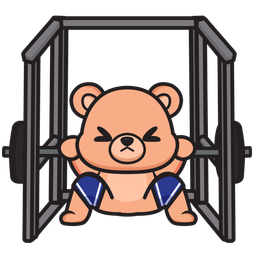
Reverse Band Power Squat
Also known as: Reverse Band Squat • Reverse Band Back Squat
Hop into the rack like a strong bear in a springy forest trap. The bands help you most at the bottom, so you can drive up fast and powerful with a heavier bar. Stay braced, keep your paws planted, and roar through the sticking point with speed and control.
Instructions
- Set safety pins/straps in a power rack at an appropriate height.
- Loop two strong bands over the top crossmember/pegs and attach the other ends securely to the barbell sleeves.
- Load the barbell (accounting for band assistance) and center it in the rack.
- Step under the bar in a back squat position, set your upper back tight, and unrack with a stable stance.
- Take a breath, brace your trunk, and descend under control to your target depth.
- Drive up explosively, keeping your knees tracking over your toes and your chest and hips rising together.
- Stand tall to full lockout, reset your breath and brace, then repeat for reps.
- Re-rack the bar carefully and ensure the bands remain secured.
Benefits
- Allows heavier overload while reducing stress at the bottom position
- Improves rate of force development and explosive drive out of the hole
- Accommodates the squat strength curve for more consistent effort through the range
- Can build confidence and technique under heavier loads
- May reduce irritation for lifters sensitive to deep-bottom loading (when appropriately programmed)
Key Points
- Use bands that provide the most assistance in the bottom and less near the top.
- Brace hard before each rep; treat it like a heavy squat.
- Control the descent; do not let the bands yank you downward.
- Drive up with maximal intent while maintaining position.
- Use safeties and check band attachment points before lifting.
Common Mistakes
- Using bands that are too strong, making the bottom unrealistically easy and destabilizing
- Letting the bands pull you into the hole and losing tightness
- Relaxing at the bottom instead of staying braced and controlled
- Allowing knees to cave in or heels to lift during the ascent
- Misloading the bar by ignoring how much assistance the bands provide
- Skipping safety pins/straps or failing to inspect band wear and attachment security
Muscle Groups
Upper LegLower LegCoreGlutes