 Bearly Fit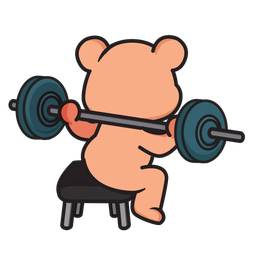
Squat To A Bench
Also known as: Box Squat • Bench Squat • Loaded Bench Squat • Goblet Squat to Bench
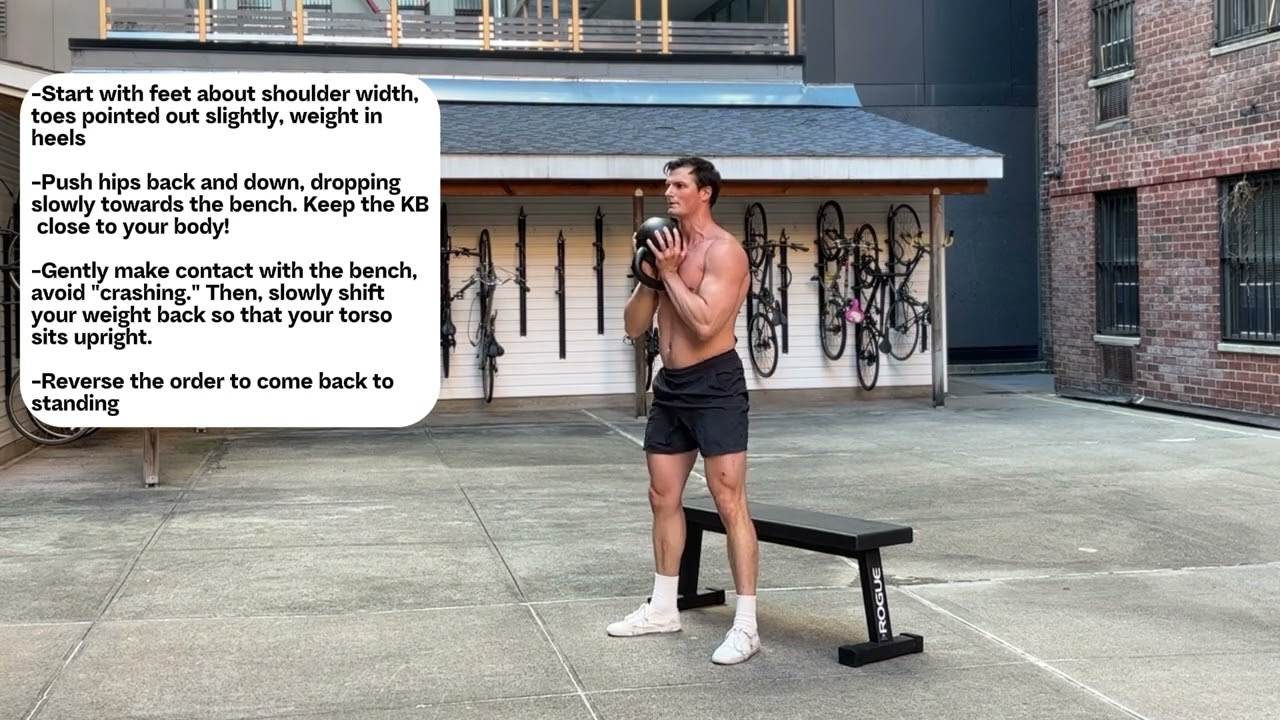
Squatting to a bench is like practicing the perfect sit - something even bears appreciate after a long hike. It teaches control, improves depth, and keeps your form honest. Whether you're holding a dumbbell, kettlebell, or loading up with a barbell, this move helps you build strong legs and glutes while giving your knees a friendly check-in along the way.
Instructions
- Stand in front of a bench with your feet shoulder-width apart and toes slightly turned out.
- Hold a dumbbell in a goblet position, a barbell across your upper back, or a kettlebell in front of your chest.
- Engage your core and initiate the squat by pushing your hips back and bending your knees.
- Lower your body until your glutes gently tap the bench without sitting down fully.
- Pause briefly, then drive through your heels to return to the starting position.
- Repeat for the desired number of reps, maintaining control and form throughout.
Benefits
- Improves squat form and depth consistency.
- Strengthens the quads, glutes, and hamstrings.
- Reduces risk of lower back strain by guiding proper posture.
- Helps beginners learn proper squat mechanics.
- Can be scaled easily with different weights and implements.
Key Points
- Use the bench as a depth guide, not a seat.
- Keep your chest up and back straight throughout the movement.
- Engage your core and avoid letting your knees cave inward.
- Control the descent and avoid bouncing off the bench.
- Drive through your heels to activate your glutes and hamstrings.
Common Mistakes
- Sitting fully onto the bench and losing muscle tension.
- Leaning too far forward or letting the chest drop.
- Allowing the knees to collapse inward.
- Using a bench that is too high or too low for proper depth.
- Rounding the lower back at the bottom of the squat.
Muscle Groups
Upper LegCoreGlutes